
Contents:
Common Names | Parts Usually Used | Plant(s) & Culture | Where Found | Medicinal Properties | Biochemical Information
Legends, Myths and Stories | Formulas or Dosages | Bibliography
Scientific Names
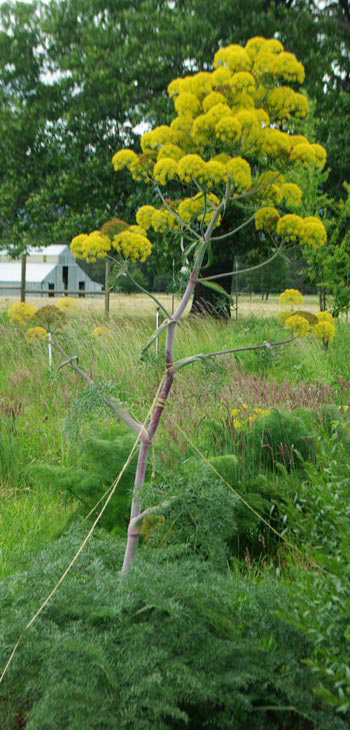
- Ferula foetida L.
- Ferula assa-foetida
- Ferula asafoetida
- Apiaceae
- Umbelliferae
- Umbel family
Common Names
- A wei (Chinese name)
- Devil’s dung
- Ferula
- Food of the gods
- Hingu (Sanskrit name)
Parts Usually Used
Juice (or resin)
Back to Top
Description of Plant(s) and Culture
Asafetida is the gummy dried juice of a large Asiatic perennial plant; its large, bristly, fleshy root produces a stem from
Back to Top
Where Found
Found in Turkestan, Afghanistan, and Iran. Grows wild in central United States.
Back to Top
Medicinal Properties
Antispasmodic, aromatic, carminative, digestive, expectorant, laxative, sedative, nervine, analgesic, anthelmintic, aphrodisiac, antiseptic
Back to Top
Biochemical Information
Essential oil, resin, ferulic acid, glue, sec-butyl-propenyl disulfide, farnesiferol, bassorin, sulphate of lime, carbonate of lime, oxide of iron, alumina, malate of lime
Back to Top
Legends, Myths and Stories
As its name suggests, asafetida has a fetid smell and a nauseating taste; characteristics that also burdened it with the name devil’s dung. In the Middle Ages, a small piece of the gum was worn around the neck to ward off disease. Whatever effectiveness it had was probably due to the antisocial properties of the amulet rather than any medicinal virtue.
Surprisingly, in Persia asafetida was used as a condiment and called the “food of the gods”.
This herb is the major component in the famous Ayurvedic herbal formula Hingashtak, Sanskrit name is hing.
Asafetida is also derived from another species of ferula (F. assa-foetida) which grows in Iran and West Afghanistan.
In Persia this herb is so highly esteemed as a condiment, it is mixed with almost all their dishes. French gastronomers rub a little asafetida on hot plates from which they eat beef steaks. The distinctive flavor of Worcestershire sauce is obtained by the addition of this gum. When used with discretion, it adds character to curries, stews, gravies, etc.
Skillful manipulation has made asafetida a useful ingredient in fine perfumes. It is still regarded a valuable medicinal in Europe, Near and Far East. As a condiment, it is recommended only to the hearty and the brave.
Back to Top
Formulas or Dosages
In June the roots of
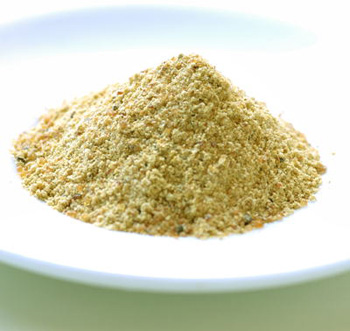
Powder: because of its nauseating taste, it is usually taken in pills.
Tincture: a dose is 1/2 to 1 tsp.
Back to Top
Bibliography
 The Herb Book
Old Ways Rediscovered
The Herbalist Almanac
Herbal Gardening, compiled by The Robison York State Herb Garden, Cornell Plantations, Matthaei Botanical Gardens of the University of Michigan, University of California Botanical Garden, Berkeley., Pantheon Books, Knopf Publishing Group, New York, 1994, first edition
American Folk Medicine
The Yoga of Herbs: An Ayurvedic Guide to Herbal Medicine
Planetary Herbology
Webster’s New World Dictionary
