Skip to content
  • Home
  • Herb Index
  • Resources
  • Credits & About This Site
  • CAUTION!
  • Shop For Carefully Curated Herb Products
Medicinal Herb Info

Medicinal Herb Info

Baneberry

Contents:

Common Names | Parts Usually Used | Plant(s) & Culture | Where Found
Uses | Warning | Bibliography

Scientific Names
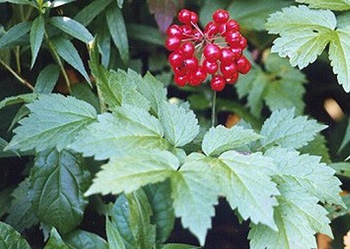
Red Baneberry

  • Baneberry, red
    • Actaea rubra L.
  • Baneberry, white
    • Actaea pachypoda L.
    • Buttercup family

Common Names

  • Red Baneberry
  • White Baneberry
  • White baneberry is known as Doll’s eyes

Back to Top


Parts Usually Used

Root, in both red and white baneberry.
Back to Top


Description of Plant(s) and Culture
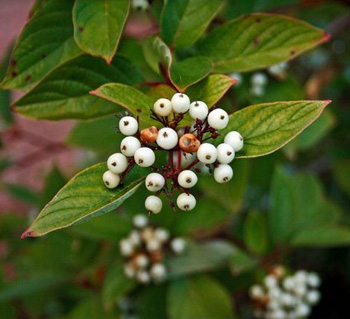
White Baneberry

Red baneberry is a perennial; 2-3 ft. tall. Similar to white baneberry, though the flowerhead is rounder, and the berries are red and on less stout stalks. It fruits July to October.

White baneberry is a perennial, 1-2 ft. tall. Leaves twice-divided, leaflets oblong, sharp-toothed. Flowers in oblong clusters on thick red stalks. Fleshy white berries with a dark dot at the tip; fruits July to October. Flowers April to June

Back to Top


Where Found

Found in rich woods. Southern Canada to northern New Jersey, West Virginia, west through Ohio and Iowa to South Dakota, Colorado, Utah, and Oregon.
Back to Top


Uses

American Indians used red baneberry root tea for menstrual irregularity, postpartum pains, and as a purgative after childbirth; also used to treat coughs and colds.

Menominees used small amount of white baneberry root tea to relieve pain of childbirth, headaches due to eye strain. Once used for coughs, menstrual irregularities, colds, and chronic constipation; thought to be beneficial to circulation

Back to Top


Warning

All parts of white baneberry may cause severe gastrointestinal inflammation and skin blisters. Its use is not recommended.

Red baneberry is poisonous. May cause vomiting, gastroenteritis, irregular breathing, and delirium. Its use is not recommended. These herbs are poisonous.
Back to Top


Bibliography

Buy It! Eastern/Central Medicinal Plants, by Steven Foster and James A. Duke., Houghton Mifflin Company, 215 Park Avenue South, New York, NY 10000

Buy It! How Indians Use Wild Plants for Food, Medicine & Crafts, by Frances Densmore, Dover Publications, Inc., 180 Varick Street, New York, NY 10014, first printed by the United States Government Printing Office, Washington, in 1928, this Dover edition 1974

Back to Top


Share
  • coffee may help prevent certain cancers
    Can Coffee Lower Your Risk of Certain Cancers? In the News
  • dark chocolate
    Chocolate for Your Sweetheart May Offer Health Benefits In the News
  • Fagara
    Top Herbs to Support Sickle Cell Anemia Symptoms Naturally In the News
  • Purple Nut Sedge: Today’s Weed was Yesterday’s Medicinal Herb Ayurveda
  • apples & strawberries
    Fruit & Vegetable-Based Compound May Help Slow ALS and Dementia Progression In the News
  • Herb Pruning Tools and Drying Equipment
    Tools for Your Home Herb Garden Uncategorized
  • medicinal herbs
    Andean Healing: High-Altitude Herbs of the Inca and Their Descendants Medicinal Herbs
  • Black Cardamom and lung cancer
    Black Cardamom and Its Potential Role in Preventing Lung Cancer In the News

Copyright © 1996-2025 Medicinal Herb Info. All Rights Reserved

Powered by PressBook Premium theme