
Contents:
Common Names | Parts Usually Used | Plant(s) & Culture | Where Found
Uses | How Sold | Warning | Resource Links | Bibliography
- Aralia spinosa L.
- Ginseng Family
- Angelica tree
Scientific Names
Common Names
Parts Usually Used
Root and berries
Back to Top
Description of Plant(s) and Culture
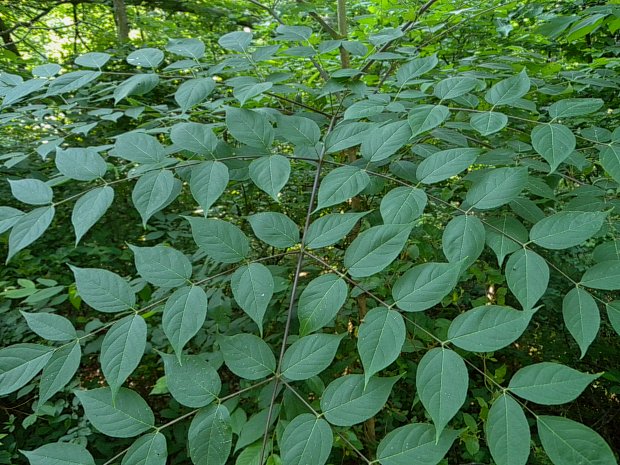
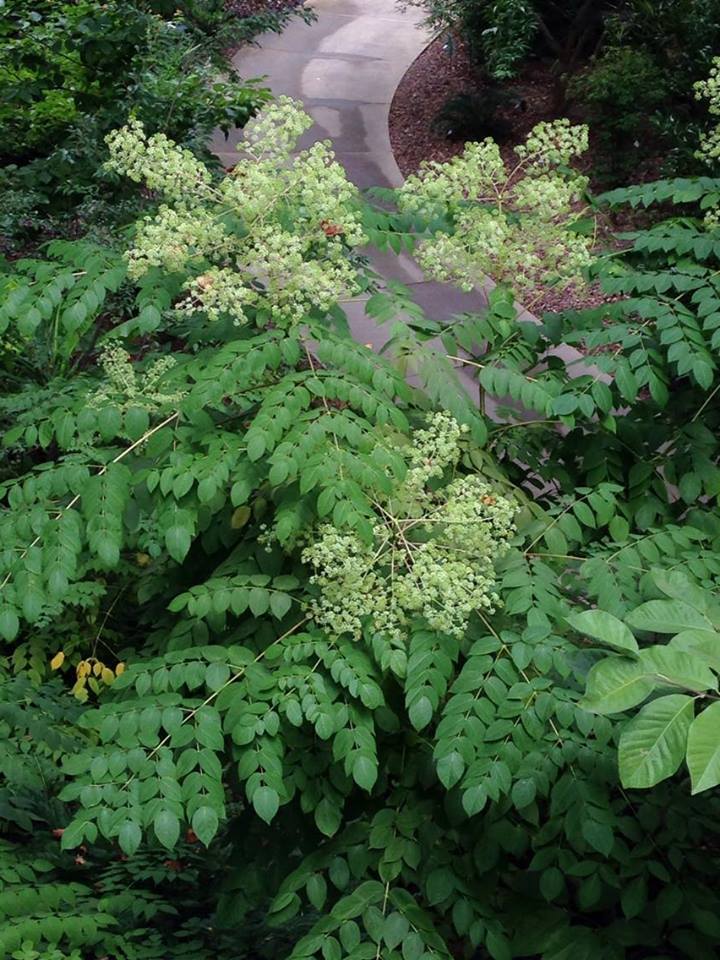
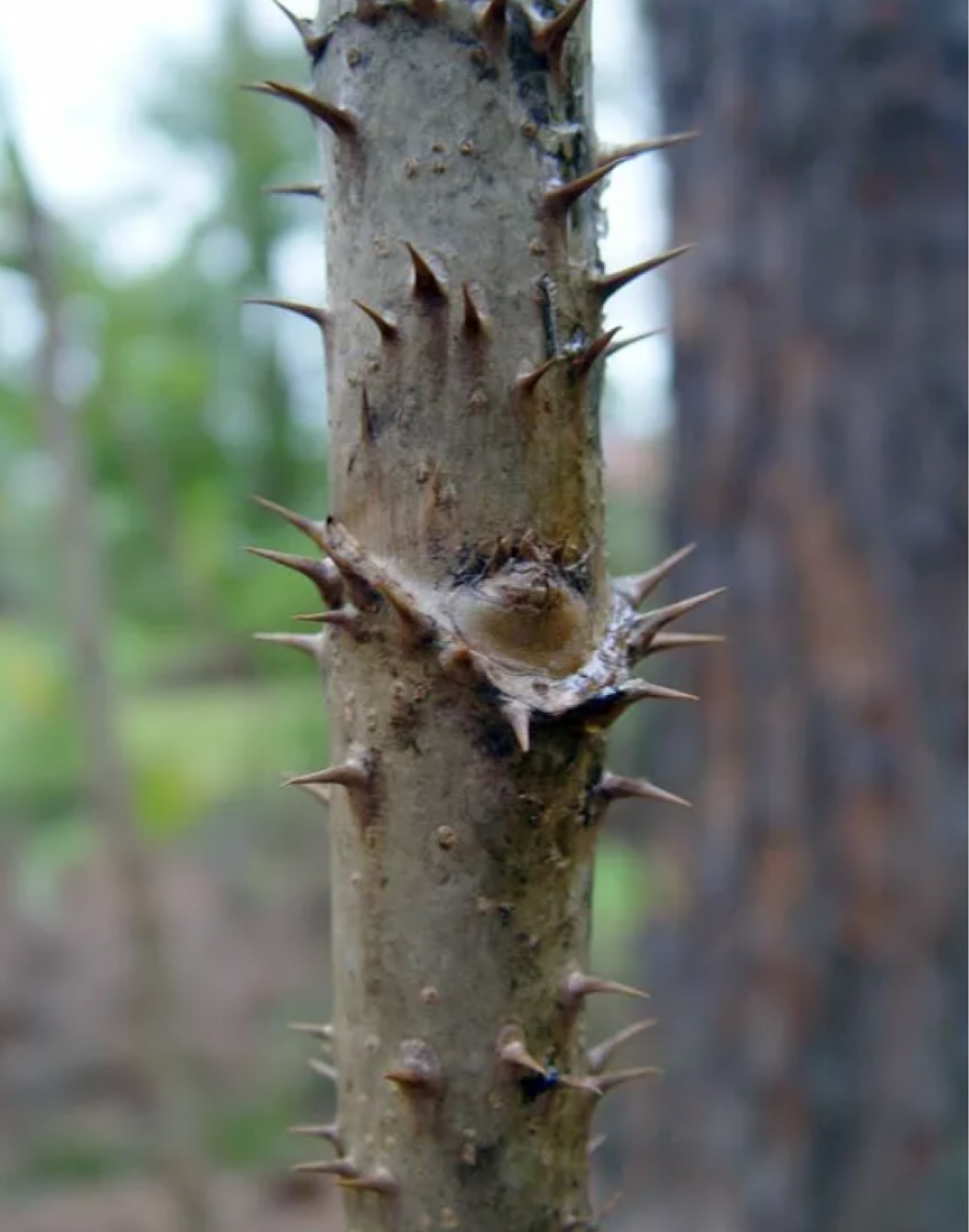
The largest North American member of the ginseng family. It may grow to 30 feet tall, with a trunk 6 inches in diameter. Sharp curved spines surround joints on the trunk, especially of younger specimens. The large compound leaves (to 6 feet long) are twice divided and topped in summer by an enormous panicle of tiny white blossoms in umbels. The purple-red berries form by September or October.
Woody; 30 ft. tall with trunk 6 inches in diameter. Main stem and leaf stalks with any sharp, often stout, spines. Leaves large (to 6 ft. long), twice-divided; leaflets numerous, oval, toothed. Tiny white flowers in umbels, in a very large panicle (flowers July-September); purple-red berries form by September or October.
Back to Top
Where Found
Rich woods, alluvial soils. Southern New England (cultivated) to Florida; Texas north to Michigan.
Back to Top
Uses
In folk tradition, fresh bark strongly emetic, purgative, thought to cause salivation. Tincture of berries used for toothaches, and rheumatic pain. Root poulticed for boils, skin eruptions, and swelling.
In folk tradition, fresh bark used as strong emetic, purgative, thought to cause salivatioon. Tincture of berries used for toothaches, rheumatic pain. Root poulticed for boils, skin eruptions, swelling.
Back to Top
How Sold
Tincture
Back to Top
Warning
Handling roots may cause dermatitis. Large amounts of berries poisonous.
Use with professional medical supervision.
Back to Top
Resource Links
Civil War Era Medicinals Found Potentially Effective
Futurity: 3 Plants from U.S. Civil War Medical Guide Fight Infection
Emory University: Civil War plant medicines blast drug-resistant bacteria
Bibliography
 Resources of the Southern Fields and Forests, Medical, Economical, and Agricultural; Being Also a Medical Botany of the Confederate States, by Francis Peyre Porcher
Wild Plants and Survival Lore: Secrets of the Forest, by Mark Warren
Eastern/Central Medicinal Plants
Webster’s New World Dictionary
